Add Us On Google

If you're in your 60s or 70s, it's easy to think everyone else saved more than you did. But the latest data paint a more positive story. The Federal Reserve's 2025 Survey of Consumer Finances (SCF), released in October 2026, suggests the bar for families headed by someone 65 to 74 — an age group made up mostly of baby boomers — may be lower than you think.
Here are six signs that your plan might already be ahead, and you're doing better financially than you think.
Now Available: The Definitive Guide to Retirement Income
Many successful investors eventually reach the same moment. The saving is done, the portfolio is built, and the question quietly changes from how much can I grow this to how much can I take out? Get that second question wrong and decades of good investing can come apart in a handful of years.
That is exactly what The Definitive Guide to Retirement Income helps answer.1 <p class="">Investing in securities involves a risk of loss. Past performance is never a guarantee of future returns. Investing in foreign stock markets involves additional risks, such as the risk of currency fluctuations. Guides are provided by Fisher Investments. The publisher may be compensated when readers request a guide.</p> It covers what your retirement could actually cost, which income sources are worth using, and the withdrawal math that decides whether the money lasts. It is free today from Fisher Investments. Read More Here ›
You have a retirement account
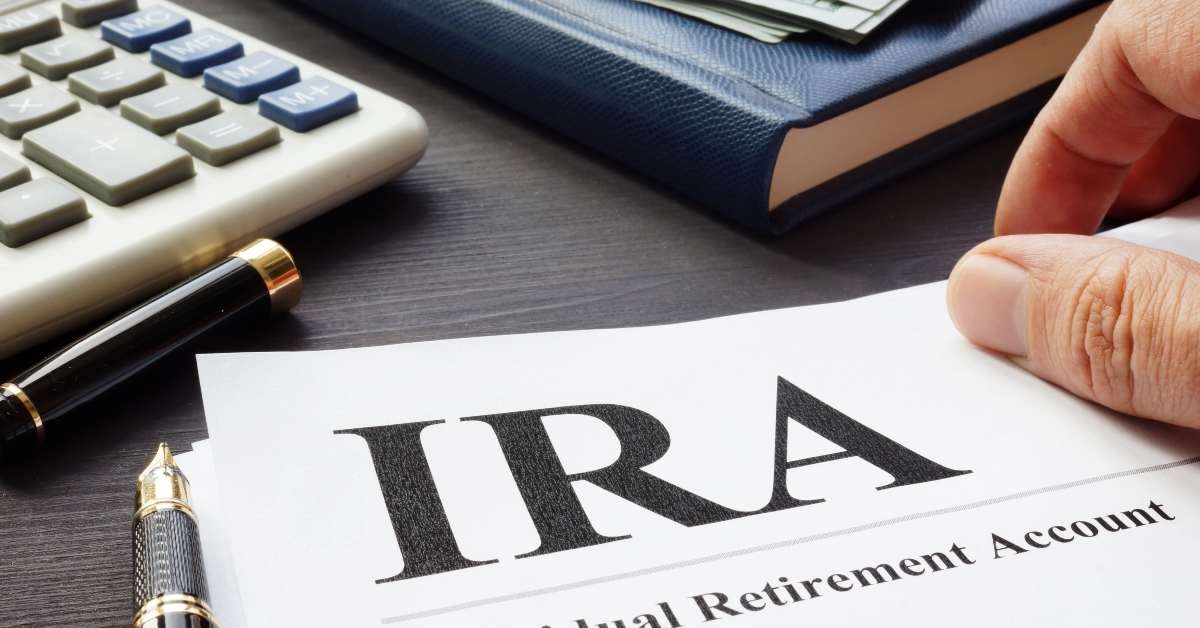
The SCF survey found that just about 49% of families headed by someone between the ages of 65 and 74 had a retirement account, such as a 401(k) or IRA. That's down from 51% in 2022, meaning roughly half of this age group has no dedicated retirement account.
Some of those families may be on a traditional pension instead; others may have drawn their accounts down. But if you have a 401(k), IRA, or similar account with money in it, you're among the better-equipped half.
Your retirement savings exceed $257,000
The median balance among families aged 65 to 74 with a retirement account was $257,000 in 2025. Half of the account holders had more and half had less. The average was much higher at about $767,510 since a small number of very large accounts pull it up.
The median is therefore usually the more realistic measure. If you have more than $257,000 in 401(k) and IRA accounts, you're better off than the typical (median) saver your age.
You carry little or no debt
Many people still carry debt into retirement. According to SCF, 67.7% of families headed by someone aged between 65 and 74 had some type of debt.
Overall, debt is squeezing more households. In 2025, 8.6% of families directed over 40% of their income toward debt payments, compared to 6.5% in 2022. If you have paid off your mortgage and don't carry a credit card balance, more of your income could go toward living rather than interest.
Released: The Definitive Guide to Retirement Income
Most people spend their entire working lives focusing on one thing: growing a pile of money. Then they retire and discover the skill they actually need is close to the opposite. Turning that pile into steady income, year after year, through good markets and bad, without ever running out. It may be the least discussed and most consequential transition in personal finance, and plenty of otherwise careful investors walk into it with no real plan.
That is exactly what The Definitive Guide to Retirement Income helps answer.1 <p class="">Investing in securities involves a risk of loss. Past performance is never a guarantee of future returns. Investing in foreign stock markets involves additional risks, such as the risk of currency fluctuations. Guides are provided by Fisher Investments. The publisher may be compensated when readers request a guide.</p> It is a free guide from Fisher Investments covering what your retirement will really cost, where the cash flow should come from, and how much you can safely withdraw each year. Learn More Here ›
You have guaranteed income beyond Social Security
Social Security is the backbone of most retirement budgets, but it typically isn't meant to replace your retirement income. The U.S. Census Bureau said about one in four of the 58 million adults 65 and older got pension income in 2022, or about 15.2 million.
A pension, annuity, or other guaranteed source of income can help pay the bills regardless of what the stock market does. This may mean less pressure to sell investments when markets go down.
You have an emergency fund
Unexpected expenses don't stop when the paychecks do. In the Fed's Survey of Household Economics and Decisionmaking, 63% of adults say they'd pay for an unexpected $400 expense with cash or its equivalent in 2025.
That means more than a third would have to borrow or sell something to cover an unexpected expense. If you can comfortably cover emergencies without dipping into your retirement accounts, you are ahead of many Americans.
The general rule of thumb is to set aside three to six months of living expenses in a high-yield savings account.
You have a plan for health care costs
Fidelity's 2026 Retiree Health Care Cost Estimate shows that a 65-year-old retiring in 2026 could expect to spend an average of $185,500 on health care throughout retirement. That's up 7.5% from last year and does not include long-term care.
But 54% of pre-retirees surveyed by Fidelity wrongly think that all of their health costs will be covered by Medicare. If you have planned for premiums, out-of-pocket costs, and possible long-term care, you've already tackled one of retirement's biggest expenses.
Retirement News: Almost 80% of Americans fear a retirement age increase — here’s the real reason why
Bottom line
Retirement savings comparisons can feel discouraging, but the numbers suggest many people are ahead of where they think they are. If you checked several of these boxes, these habits could help protect your progress and keep you on track for retirement:
- Review your Medicare coverage annually: Medicare Open Enrollment is from Oct. 15 to Dec. 7, and plan costs and coverage can change from year to year. This is the perfect time to make changes to your coverage.
- Weigh when to claim Social Security: If you haven't claimed yet, you earn delayed retirement credits of 8% per year for each year you wait past full retirement age, if you were born in 1943 or later, up to age 70.
- Manage withdrawals carefully: If you take out too much too soon, you may deplete your savings faster than you realize.
- Rebalance your portfolio once a year: Strong market years can leave you holding more stock than you intended. Consider getting the help of a financial advisor.
- Bolster your emergency fund: Always treat it like a bill you pay yourself until you have enough to cover at least three months of living expenses. But the bigger your emergency fund, the better.
- Get a second opinion: A fee-only financial advisor could help you stress-test your plan and spot gaps that could make your retirement more comfortable.
FAQs
Does having more savings than other retirees mean you have enough?
How can you estimate how much income your savings need to provide?
Start with your expected retirement expenses, then subtract income from Social Security, pensions, and other reliable sources. The remaining gap is what your savings would need to cover. Include occasional expenses, such as home repairs and vehicle replacements, in your estimate.
Will your spending automatically drop when you retire?
Some work-related expenses, such as commuting, may decline. But travel, hobbies, and other retirement plans can offset those savings. Build your budget around how you expect to live instead of assuming every expense will shrink.
More from FinanceBuzz:
- Retire like the rich: 14 ways you could build wealth in your 50s.
- Find out if you could pay less for car insurance in just a few clicks.
- Make these 7 savvy moves when you have $1,000 in the bank.
- 14 moves seniors could benefit from but often forget about.








- Huge discounts on travel, groceries, prescriptions and more
- Access to financial planning resources and health tools
- For a limited time, get 55% off 5-year plans