Planning for retirement is a complicated process, and it requires attention to detail that many miss. If you make a big mistake in one of your accounts, it can be hard, if not impossible, to reverse. That means you miss out on the critical compounding interest that gives you the capital needed to have a stress-free retirement and stretch your retirement dollars further.
Here are 10 irreversible mistakes people make with their retirement accounts.
Now Available: The Definitive Guide to Retirement Income
Many successful investors eventually reach the same moment. The saving is done, the portfolio is built, and the question quietly changes from how much can I grow this to how much can I take out? Get that second question wrong and decades of good investing can come apart in a handful of years.
That is exactly what The Definitive Guide to Retirement Income helps answer.1 <p class="">Investing in securities involves a risk of loss. Past performance is never a guarantee of future returns. Investing in foreign stock markets involves additional risks, such as the risk of currency fluctuations. Guides are provided by Fisher Investments. The publisher may be compensated when readers request a guide.</p> It covers what your retirement could actually cost, which income sources are worth using, and the withdrawal math that decides whether the money lasts. It is free today from Fisher Investments. Read More Here ›
Missing Roth conversion windows
Converting your account to a Roth IRA means you'll pay taxes now, but you'll get tax-free withdrawals later, which can be great for massive investment growth later on. However, changes in tax laws or income levels can complicate matters.
If you convert too much at once, you'll have a higher taxable income, and there's no way to get that money back.
Early withdrawals from retirement accounts
If you pull money from your 401(k) or similar account before the age of 59 1/2, you'll trigger an IRS penalty of 10% in addition to the withdrawal counting as taxable income.
That extra payment to the federal government can't be clawed back, so you're permanently lowering your growth potential.
Missed catch-up contributions
The IRS allows for "catch-up" contributions for individuals age 50 and over, so you can put in an additional $7,500 into eligible retirement accounts. Over the course of a decade, that's a whopping $75,000 of extra money that could be growing in your account.
Even one missed year during that timeframe can be a missed opportunity that you don't get back.
Released: The Definitive Guide to Retirement Income (Sponsor)
Most people spend their entire working lives focusing on one thing: growing a pile of money. Then they retire and discover the skill they actually need is close to the opposite. Turning that pile into steady income, year after year, through good markets and bad, without ever running out. It may be the least discussed and most consequential transition in personal finance, and plenty of otherwise careful investors walk into it with no real plan.
That is exactly what The Definitive Guide to Retirement Income helps answer.1 <p class="">Investing in securities involves a risk of loss. Past performance is never a guarantee of future returns. Investing in foreign stock markets involves additional risks, such as the risk of currency fluctuations. Guides are provided by Fisher Investments. The publisher may be compensated when readers request a guide.</p> It is a free guide from Fisher Investments covering what your retirement will really cost, where the cash flow should come from, and how much you can safely withdraw each year. Learn More Here ›
IRA rollover timing mistakes
You have a narrow window after leaving a job to rollover your 401(k) into an IRA. If you miss that, you only have 60 days to correct it before the IRS treats it as a withdrawal, and you'll have to pay the 10% penalty.
Depending on the size of your account, that's a significant chunk of money that you don't get back.
Pension payout choice errors
Depending on your pension plan, you'll have multiple distribution options. Once you make a choice, it's usually irrevocable once you file the paperwork. That means choosing incorrectly could permanently reduce your annual income and potentially affect your spouse's and heirs' as well.
Careful modeling and projections are critical before making the distribution choice.
Defaulting on 401(k) loans after job loss
It's possible to take out a loan against your company's 401(k), but you have to repay it after you leave the company. If you fail to repay the loan by the tax filing deadline, the IRS will consider it a distribution, and it will be taxed as regular income, in addition to the 10% early withdrawal penalty if you're under 59 1/2.
Missing required minimum distributions (RMD)
Once you reach the age of 73 (or 75 for future generations), you have to withdraw a certain percentage of your retirement accounts annually. If you fail to do so, the IRS imposes a stiff penalty.
That means if you forget to make the RMD, you'll permanently lose money since you'll have to pay the penalty. There's no way to make it up, and you need to meet your RMD target by the end of the calendar year, not just before tax season.
Lack of diversity in your investment portfolio
Having a robust investment portfolio in your retirement accounts is the best way to handle market volatility. If you have too much in one company, you risk losing big if the stock plummets.
Had you overinvested in a company like Enron in the early 2000s, your portfolio would have dropped massively, costing you greatly, with no way to recoup the loss.
Prohibited transactions in IRA accounts
Certain transactions can trigger IRS penalties on your IRA and eliminate its tax protections. If you or a disqualified person (like a spouse, child, or beneficiary) engages in a prohibited transaction (such as buying or selling property with your IRA, providing services, or self-dealing), the IRS treats the entire account as distributed, making it taxable that year.
Even simple actions, like repairing a faucet at an IRA-owned property, can count, so proceed carefully.
Get instant access to hundreds of discounts
Over 50? Join AARP today— because if you’re not a member you could be missing out on huge perks like discounts on travel, dining, and even prescriptions.
Get 25% off membership — just $15 for your first year with auto-renewal — and a free gift if you join today.
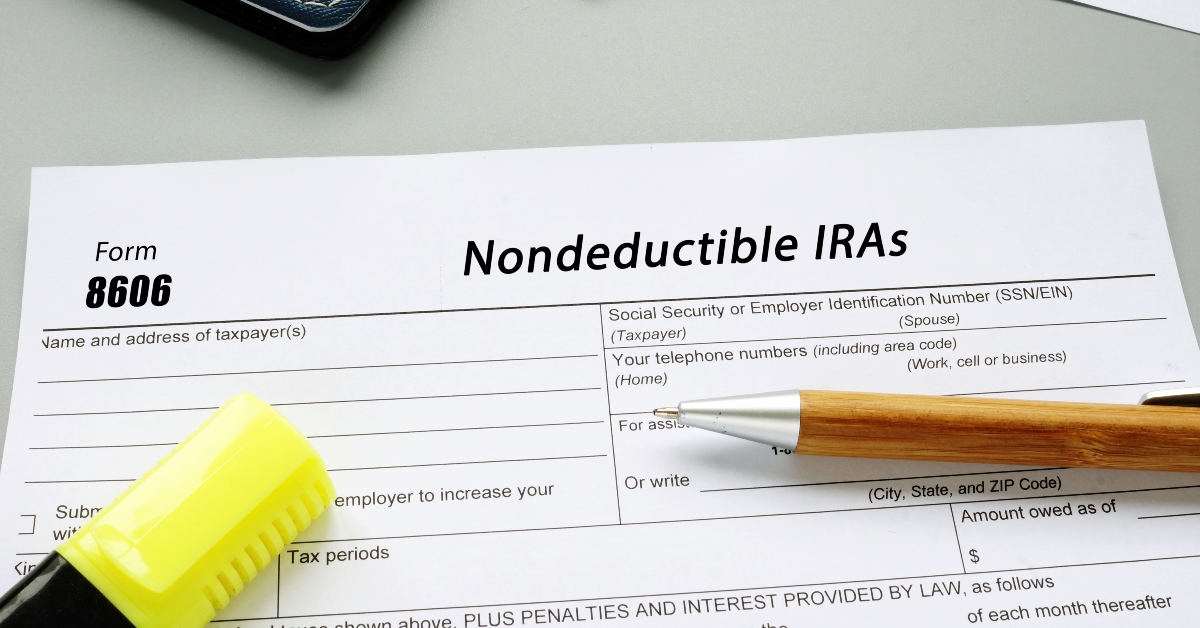
Losing IRA basis records (nondeductible contributions)
Any time you make a nondeductible contribution to your traditional IRA, you need to file Form 8606 with the IRS to track your "basis" for the portion of the account you already paid taxes on. If you don't file this form or lose track of these records, the IRS will assume your future withdrawals are 100% taxable.
This results in a "double tax" when you begin withdrawing from the account, and there's no way to reverse it.
Bottom line
Retirement accounts are powerful, but many mistakes are permanent once deadlines pass. One wrong move can cost you tens of thousands in taxes or lost growth you'll never get back. In 2021 alone, 2.8 million taxpayers took $12.9 billion in early distributions without filing correctly, potentially owing $1.29 billion in taxes and $322 million in penalties.
If you want to be well-prepared for retirement, don't let that happen: vigilance, documentation, and professional advice matter.
- Huge discounts on travel, groceries, prescriptions and more
- Access to financial planning resources and health tools
- Join AARP and get 25% off with automatic renewal
Subscribe Today
Unlock the Best Banking Deals and Bonuses
From high-yield savings accounts to cashback checking and sign-up bonuses, we bring you the best banking offers to grow your money smarter.
Add Us On Google