Add Us On Google

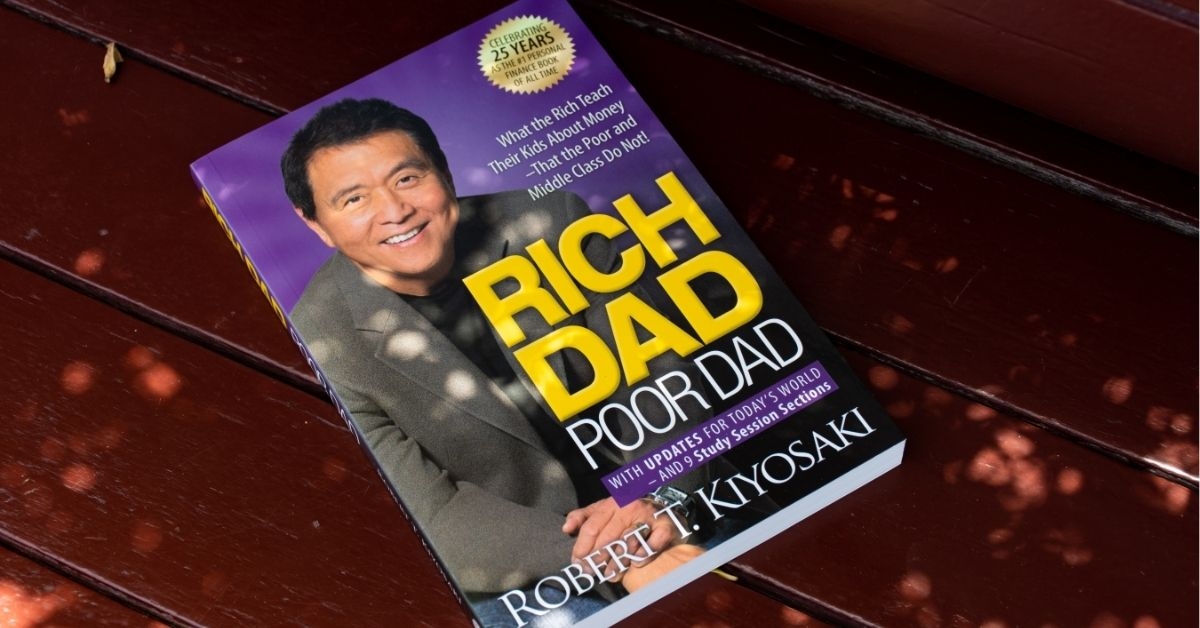
Robert Kiyosaki is once again warning investors about what he believes could be a historic market crash, and this time he's singled out Americans over 40 with retirement accounts.
The "Rich Dad Poor Dad" author declared in a September 15 post on X that the "biggest crash in history has started," warning that people with a 401(k) or IRA "may be in trouble, especially if you're over 40 years old."
His prediction is far from guaranteed, but the warning could be a reason to check up on your retirement readiness, since a major downturn could affect someone approaching retirement differently from an investor with several decades left to recover.
Now Available: The Definitive Guide to Retirement Income
Many successful investors eventually reach the same moment. The saving is done, the portfolio is built, and the question quietly changes from how much can I grow this to how much can I take out? Get that second question wrong and decades of good investing can come apart in a handful of years.
That is exactly what The Definitive Guide to Retirement Income helps answer.1 <p class="">Investing in securities involves a risk of loss. Past performance is never a guarantee of future returns. Investing in foreign stock markets involves additional risks, such as the risk of currency fluctuations. Guides are provided by Fisher Investments. The publisher may be compensated when readers request a guide.</p> It covers what your retirement could actually cost, which income sources are worth using, and the withdrawal math that decides whether the money lasts. It is free today from Fisher Investments. Read More Here ›
Kiyosaki says the crash has already started
Kiyosaki has been predicting a major stock and bond market crash for years. His latest warning says the downturn he anticipated in his 2002 book "Rich Dad's Prophecy" is now underway.
"In 2026, that crash started in Europe and Japan and is spreading across the world," he wrote, blaming the "AI frenzy," war in Iran, high debt levels, and the retirement of the Baby Boomer generation.
"If you have a 401k or IRA or Superannuation, or a RRSP you may be in trouble, especially if you're over 40 years old," the personal finance author added. Of course, no one can know exactly when the next major downturn will arrive or how severe it will be, so Kiyosaki's warning is still just one view of where markets may be headed.
Your 401(k) isn't actually an investment
Kiyosaki's warning could also give the impression that simply owning a 401(k) or IRA puts your money in danger. What matters more is what you actually hold inside the account.
A 401(k) or IRA holds investments, and what happens during a downturn depends largely on what's inside it. Someone heavily invested in stock funds could see a substantial decline, while a more diversified mix of stocks, bonds, and other assets could behave differently.
So if Kiyosaki's warning has you concerned, start by looking at how your retirement money is invested rather than worrying about the account itself.
Being over 40 doesn't automatically put your retirement in trouble
There isn't a financial cliff on your 40th birthday. Someone who's 42 and plans to retire at 67 still has another 25 years to recover from a downturn and keep contributing.
Retirement gets more complicated as you get closer to actually needing the money, though. Someone who suffers a major portfolio decline at 60 has much less time to recover than someone who experiences the same loss at 30.
That's why many target-date funds gradually reduce stock exposure and become more conservative as retirement approaches. The SEC notes that investors with longer time horizons can generally afford to take more risk because they have more time to recover from market declines.
Released: The Definitive Guide to Retirement Income (Sponsor)
Most people spend their entire working lives focusing on one thing: growing a pile of money. Then they retire and discover the skill they actually need is close to the opposite. Turning that pile into steady income, year after year, through good markets and bad, without ever running out. It may be the least discussed and most consequential transition in personal finance, and plenty of otherwise careful investors walk into it with no real plan.
That is exactly what The Definitive Guide to Retirement Income helps answer.1 <p class="">Investing in securities involves a risk of loss. Past performance is never a guarantee of future returns. Investing in foreign stock markets involves additional risks, such as the risk of currency fluctuations. Guides are provided by Fisher Investments. The publisher may be compensated when readers request a guide.</p> It is a free guide from Fisher Investments covering what your retirement will really cost, where the cash flow should come from, and how much you can safely withdraw each year. Learn More Here ›
A crash closer to retirement can be much harder to absorb
That shorter recovery window is where a major downturn can become more disruptive. Suppose you have $500,000 saved and your investments fall 30%. Your balance would drop to $350,000.
If you're 40 and still working, you may have decades to wait for markets to recover. Someone planning to retire next year may instead have to delay retirement, reduce spending, or begin withdrawing money while investments are down.
The 2008 financial crisis shows how painful that can be in practice. FINRA points to investors who planned to retire around the 2008 financial crisis, when stock prices fell 57%, as an example of how a severe decline can force people with substantial stock exposure to reconsider their plans.
Selling after a crash can create another risk
Seeing your retirement balance fall sharply can make moving everything out of stocks feel safer, but selling after a major decline can lock in losses and leave you on the sidelines if markets recover.
FINRA warns that trying to time the market can backfire because some of the strongest trading days can happen during volatile periods. Sell at the wrong moment, and you could miss part of the rebound as well as absorb the decline.
As retirement gets closer, you may decide to dial back risk or rebalance your portfolio. That can be a sensible part of long-term planning, whereas selling simply because a crash prediction has scared you could leave you reacting at the worst possible time.
Kiyosaki prefers these asset classes
Kiyosaki says he has prepared through businesses, income-producing real estate, oil wells, gold, silver, and Bitcoin rather than relying solely on conventional financial assets.
None of those alternatives is risk-free either. Bitcoin can experience extreme price swings, real estate can be illiquid and concentrated, and commodities such as gold and silver behave differently from diversified stock and bond portfolios.
So moving money because you expect a crash isn't the same as making your retirement savings safer. You're exchanging one set of risks for another.
Retirement News: Almost 80% of Americans fear a retirement age increase — here’s the real reason why
Bottom line
Kiyosaki says the "biggest crash in history" has begun and warns that people over 40 with a 401(k) or IRA could be in trouble. His forecast is not certain, but investors hoping to retire comfortably may still want to review whether their portfolio matches their timeline and tolerance for risk.
Turning 40 doesn't suddenly make a retirement account unsafe, and reacting to a crash prediction by selling after markets fall can create risks of its own. What matters more is what you actually own, how diversified you are, and how long you have before you expect to need the money.
More from FinanceBuzz:
- Retire like the rich: 14 ways you could build wealth in your 50s.
- Find out if you could pay less for car insurance in just a few clicks.
- Make these 7 savvy moves when you have $1,000 in the bank.
- 14 moves seniors could benefit from but often forget about.








- Huge discounts on travel, groceries, prescriptions and more
- Access to financial planning resources and health tools
- Join AARP and get 25% off with automatic renewal