Add Us On Google

Scammers never rest. In 2026, such thieves are working day and night to find new ways to put your financial fitness in jeopardy. Once you better understand what is going on, you are better able to take the steps necessary to protect yourself from such fraudsters.
Find out which scams are becoming more widespread, and what to do to keep fraudsters at bay.
Now Available: The Definitive Guide to Retirement Income
Many successful investors eventually reach the same moment. The saving is done, the portfolio is built, and the question quietly changes from how much can I grow this to how much can I take out? Get that second question wrong and decades of good investing can come apart in a handful of years.
That is exactly what The Definitive Guide to Retirement Income helps answer.1 <p class="">Investing in securities involves a risk of loss. Past performance is never a guarantee of future returns. Investing in foreign stock markets involves additional risks, such as the risk of currency fluctuations. Guides are provided by Fisher Investments. The publisher may be compensated when readers request a guide.</p> It covers what your retirement could actually cost, which income sources are worth using, and the withdrawal math that decides whether the money lasts. It is free today from Fisher Investments. Read More Here ›
Medicare scams on Facebook are surging
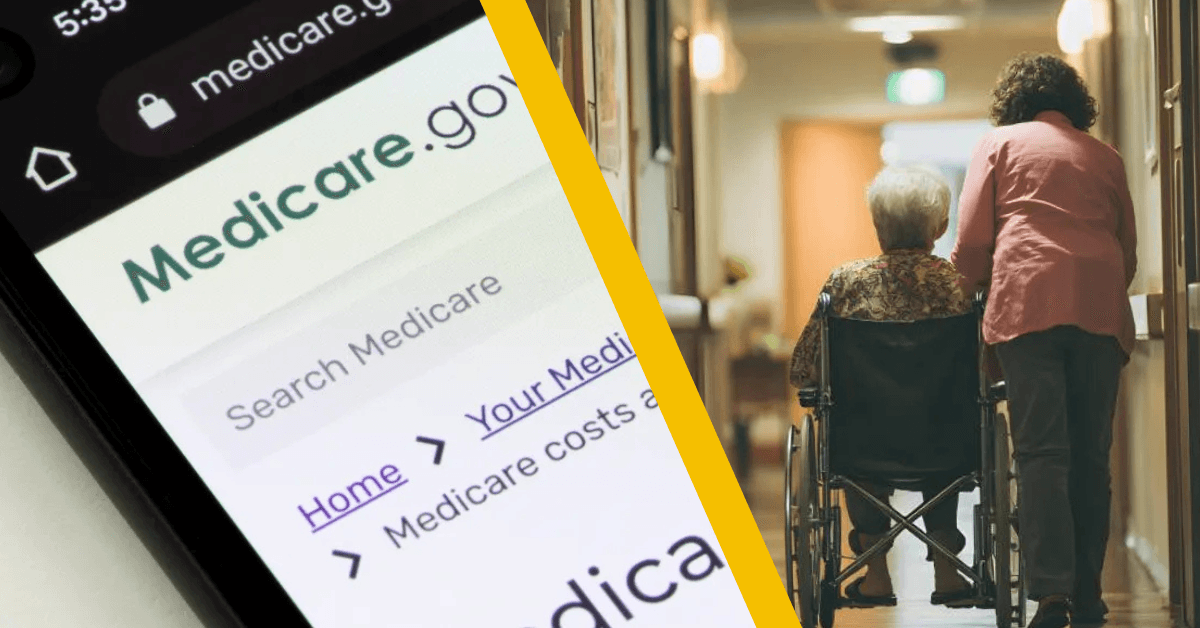
Recently, seniors enrolled in the nation's retirement health insurance program have been the target of a surge of scams tied to Facebook.
During the past year, more than 215 million views were focused on Medicare ads from scammers published on Facebook, according to the Center for Countering Digital Hate (CCDH). That is almost six times the amount of scams recorded in all previous years combined. Approximately 73% of those impressions reached users over age 65, according to the CCDH report.
Here are some of the latest Medicare scams and how to avoid them.
1. The fake Part D refund call
This scam exploits confusion around the real changes to Medicare Part D, which caps out-of-pocket prescription costs at $2,100 starting in 2026.
In this scam, fraudsters typically reach out to a Medicare enrollee to claim that the senior overpaid and is eligible for a big refund. In many cases, the scam centers on those enrolled in Medicare Part D, the aspect of the program that covers prescription drugs.
For example, a scammer may claim that the senior has overpaid for Medicare and is entitled to a refund.
The scammer then asks for the senior's Social Security number, bank account number, and other personal information.
Red flag: Medicare does not ask seniors to cough up their Medicare or Social Security number. So, if you are asked to do so, it's likely as part of a scam.
2. AI voice cloning
Artificial intelligence programs offer scammers the ability to place phone calls to Medicare enrollees and convincingly pretend that they are Medicare representatives or doctors, family members, or fake fraud investigators.
Once a crook has successfully hoodwinked an enrollee, the fraudster requests the senior's Medicare or Social Security number, or even their bank account number.
Red flag: Once again, you should always be suspicious when you are asked to give up such personal information. Also, beware if the caller tries to pressure you into divulging personal information in exchange for getting access to a "new" Medicare benefit.
Released: The Definitive Guide to Retirement Income
Most people spend their entire working lives focusing on one thing: growing a pile of money. Then they retire and discover the skill they actually need is close to the opposite. Turning that pile into steady income, year after year, through good markets and bad, without ever running out. It may be the least discussed and most consequential transition in personal finance, and plenty of otherwise careful investors walk into it with no real plan.
That is exactly what The Definitive Guide to Retirement Income helps answer.1 <p class="">Investing in securities involves a risk of loss. Past performance is never a guarantee of future returns. Investing in foreign stock markets involves additional risks, such as the risk of currency fluctuations. Guides are provided by Fisher Investments. The publisher may be compensated when readers request a guide.</p> It is a free guide from Fisher Investments covering what your retirement will really cost, where the cash flow should come from, and how much you can safely withdraw each year. Learn More Here ›
3. Fake 'new card' verification calls
Scammers sometimes call a Medicare beneficiary and insist that the senior must verify their new Medicare card. In order to complete such verification, the fraudster may request the senior's Medicare number.
Red flag: The federal government does not ask you to verify your Medicare card in this way. Another red flag emerges if the caller asks you to pay a processing fee in order to get your new card.
4. Flex-card scams
Medicare Advantage plans sometimes offer "flex cards" that help enrollees cover the cost of some medical expenses.
Unfortunately, scammers have exploited this trend by placing fake ads that claim enrollees are entitled to cards to pay for food or other items. In reality, the cards the fraudsters advertise are not legitimate. Instead, the crooks merely want access to your Social Security, credit card, or banking information.
Red flag: Be wary of any promises regarding flex cards that do not come directly from your Medicare Advantage plan provider. Also, be suspicious if you are told that you are allowed to use the card to pay for any expense. Legitimate flex cards typically have strict rules about when you are able to use the cards.
What these Medicare scams have in common
Although these scams differ from one another, they all share a common goal: To get you to reveal personal information.
Fraudsters typically use such scams to steal your identity. That means they are searching for a few important types of information, such as your:
- Social Security number
- Medicare number
- Bank account number
These criminals constantly engineer new scams designed to dupe you into providing them with such vital information.
Retirement News: Almost 80% of Americans fear a retirement age increase — here’s the real reason why
How to avoid these scams
Scammers never rest, so neither should you. It is important to keep your radar attuned to possible signs of a scam.
The National Council on Aging says typical indicators of a potential Medicare scam include:
- Promises of free items or perks
- High-pressure tactics to get you to switch your Medicare plan
- Notices that it is time to upgrade your Medicare card
- Threats, such as insisting your coverage is going to be canceled if you do not comply
- Claims that you are entitled to a refund
If you receive a call or notice from someone claiming to represent Medicare, stay on your guard. Instead of responding to the individual, reach out directly to Medicare. If you have an online Medicare account, log in there. Or, call Medicare directly at 1-800-MEDICARE.
Bottom line
Your golden years are a time to relax. However, a solid retirement plan requires you to also stay on your toes and avoid the schemes fraudsters use to separate seniors from their money.
A surge in Medicare scams on Facebook is just one example of the many Medicare scams that are now emerging. To protect yourself, remember that Medicare does not call unsolicited and ask for personal information.
So, if you are on the receiving end of a suspicious request, call Medicare directly at 1-800-MEDICARE to verify the information. In addition, report any suspicious activity to the Federal Trade Commission (FTC) at ReportFraud.ftc.gov.
More from FinanceBuzz:
- Retire like the rich: 14 ways you could build wealth in your 50s.
- Find out if you could pay less for car insurance in just a few clicks.
- Make these 7 savvy moves when you have $1,000 in the bank.
- 14 moves seniors could benefit from but often forget about.


Intro Offer
UNLIMITED CASHBACK MATCH: Discover will automatically match all the cash back you’ve earned at the end of your first year! There’s no minimum spending or maximum rewards. You could turn $150 cash back into $300. Click Apply Now to view important rates and disclosures. Plus, receive a $200 statement credit when you spend $500 on purchases in your first 3 months of account opening
Annual Fee $0 Why we like it