Add Us On Google

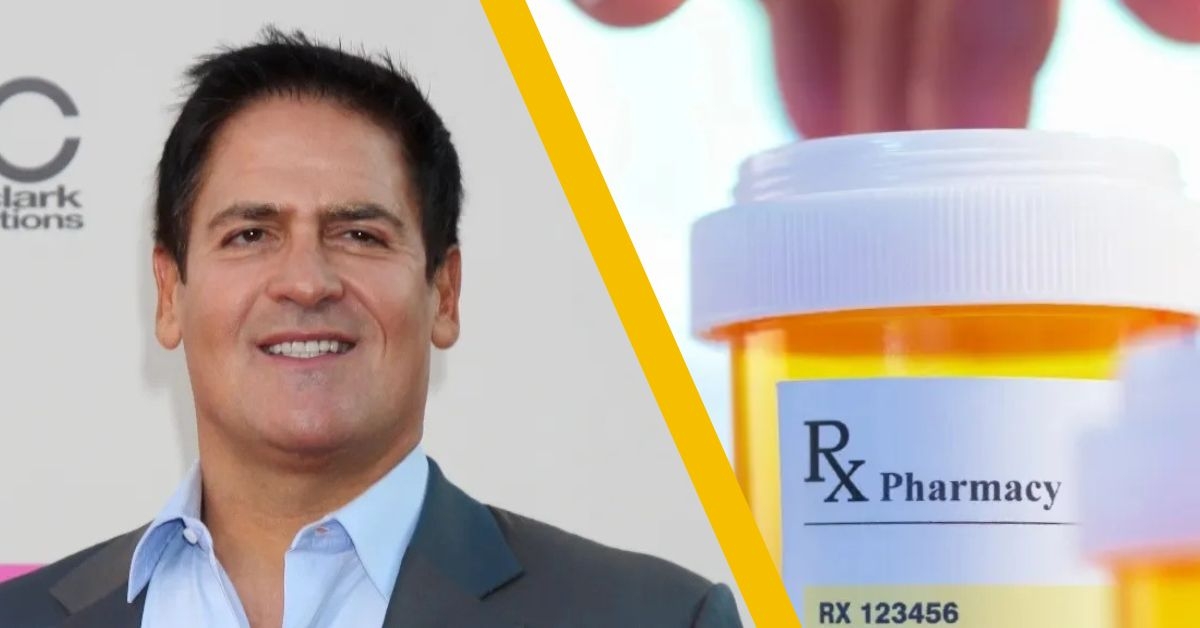
Having health insurance might make you assume your insurer has already secured the best possible price for your medical care. Mark Cuban says that's not always the case.
The billionaire entrepreneur recently pointed to the roughly $3,700 average deductible for Affordable Care Act plans and warned that some hospitals are increasingly asking patients to pay upfront. His message is straightforward: Having insurance doesn't necessarily mean you can afford to use it when you need care, which could make it harder to cope with increasing bills.
Now Available: The Definitive Guide to Retirement Income
Many successful investors eventually reach the same moment. The saving is done, the portfolio is built, and the question quietly changes from how much can I grow this to how much can I take out? Get that second question wrong and decades of good investing can come apart in a handful of years.
That is exactly what The Definitive Guide to Retirement Income helps answer.1 <p class="">Investing in securities involves a risk of loss. Past performance is never a guarantee of future returns. Investing in foreign stock markets involves additional risks, such as the risk of currency fluctuations. Guides are provided by Fisher Investments. The publisher may be compensated when readers request a guide.</p> It covers what your retirement could actually cost, which income sources are worth using, and the withdrawal math that decides whether the money lasts. It is free today from Fisher Investments. Read More Here ›
Cuban says a $3,700 deductible can still put care out of reach
Cuban's comments came after a debate over his suggestion that patients compare prices and negotiate when scheduling medical care.
"There are few times in healthcare where economics are not an issue or consideration," the former Shark Tank investor wrote on X.
He pointed specifically to ACA deductibles of around $3,700. That figure closely matches recent research from KFF, which found that the average ACA Marketplace deductible climbed to $3,786 in 2026, up from $2,759 in 2025.
"If you can't afford your deductible, there's a good chance you won't be able to get the care you need," Cuban warned.
Deductibles have become more expensive in 2026
Cuban's warning comes during a particularly difficult year for some ACA customers. KFF found that the average Marketplace deductible increased 37% in 2026, the steepest increase since the ACA marketplaces launched.
The differences between plans can be significant. The average deductible for a standard silver Marketplace plan is more than $5,000 in 2026, while some lower-income consumers who qualify for cost-sharing reductions can get substantially smaller deductibles.
That makes it important to look beyond the monthly premium when choosing coverage. A plan that saves you money every month could leave you responsible for considerably more if you unexpectedly need surgery, imaging, or other expensive treatment.
Cuban says hospitals are also asking for money upfront
A high deductible becomes even more difficult if you don't have enough savings available when treatment is scheduled.
"Not only that, an increasing number of hospitals are asking for payment up front," Cuban said. "So you are confronted with cost, whether you like it or not."
Someone with savings may be able to absorb the cost, while a person living paycheck to paycheck has much less flexibility.
Released: The Definitive Guide to Retirement Income (Sponsor)
Most people spend their entire working lives focusing on one thing: growing a pile of money. Then they retire and discover the skill they actually need is close to the opposite. Turning that pile into steady income, year after year, through good markets and bad, without ever running out. It may be the least discussed and most consequential transition in personal finance, and plenty of otherwise careful investors walk into it with no real plan.
That is exactly what The Definitive Guide to Retirement Income helps answer.1 <p class="">Investing in securities involves a risk of loss. Past performance is never a guarantee of future returns. Investing in foreign stock markets involves additional risks, such as the risk of currency fluctuations. Guides are provided by Fisher Investments. The publisher may be compensated when readers request a guide.</p> It is a free guide from Fisher Investments covering what your retirement will really cost, where the cash flow should come from, and how much you can safely withdraw each year. Learn More Here ›
Paying cash could sometimes cost less than using insurance
Cuban's proposed response is to be proactive when medical care can be scheduled rather than simply assuming your insurer has secured the lowest price.
"In healthcare, if you can schedule it, you can negotiate a cash price that is often better than what your insurance company can negotiate," he wrote.
Hospitals can charge different prices for the same service, including discounted cash prices and insurer-negotiated rates. If your insurer's price is $1,500 but the provider offers a $1,000 self-pay rate, comparing the two could save you hundreds of dollars.
The cheaper cash price can come with a catch
A lower price today doesn't necessarily mean you'll spend less over the entire year. If you pay a provider directly without running the service through your insurance, ask whether that spending will count toward your deductible or out-of-pocket maximum. Depending on the circumstances and your plan, it may not.
You should also ask exactly what a quoted price includes. A procedure can generate separate bills from the hospital, doctor, anesthesiologist, laboratory, or other providers.
Cuban's advice draws criticism from a Harvard physician
The former Shark Tank star's advice drew criticism from Dr. Adam Gaffney, a Harvard Medical School physician and researcher.
"This is not the road to a humane healthcare system," Gaffney wrote, arguing that sick patients shouldn't have to haggle over medical prices while trying to get treatment.
Cuban didn't dispute that patients would be better served by a system in which their insurance automatically made care affordable.
"We all would prefer a system where your insurance makes access easier and more economical," he replied. "That is very often not the case."
A few questions before scheduled care could save you money
Cuban isn't suggesting you shop around during a medical emergency. His advice is most applicable when you have time to schedule a procedure or test in advance.
Before agreeing to planned care, ask what you'll owe after insurance, whether there's a discounted cash or self-pay price, and what services are included in the estimate. If paying cash is cheaper, check whether that amount would count toward your deductible or out-of-pocket maximum before deciding.
You can also compare prices at other hospitals or facilities if your doctor says you have flexibility over where the service is performed. Federal transparency rules require hospitals to make pricing information available for services that can be scheduled in advance.
"Being proactive when you can be, can save you money, which may be the difference between your having access to the care you need. Or not," Cuban wrote.
Bottom line
Cuban's warning is a reminder that having insurance doesn't always make care affordable, especially when you're facing a deductible of several thousand dollars and may be asked to pay upfront.
When care can be planned in advance, comparing your insurance estimate with the cash price could potentially lower your bill. If you're looking to check up on your financial health, it's also worth considering how deductibles, cash prices, and out-of-pocket maximums interact before choosing the cheapest option today.
More from FinanceBuzz:
- Retire like the rich: 14 ways you could build wealth in your 50s.
- Find out if you could pay less for car insurance in just a few clicks.
- Make these 7 savvy moves when you have $1,000 in the bank.
- 14 moves seniors could benefit from but often forget about.


Intro Offer
UNLIMITED CASHBACK MATCH: Discover will automatically match all the cash back you’ve earned at the end of your first year! There’s no minimum spending or maximum rewards. You could turn $150 cash back into $300. Click Apply Now to view important rates and disclosures. Plus, receive a $200 statement credit when you spend $500 on purchases in your first 3 months of account opening
Annual Fee $0 Why we like it