Retirement Retirement Planning

Over 50? Here Are 8 Ways To Boost Your Retirement Savings Quickly

Transform your financial future by taking charge of your retirement savings now.

putting coins in glass jar
Updated Jan. 22, 2025
Fact check checkmark icon Fact checked
Google Logo Add Us On Google info

Saving for retirement is a major financial goal. If you're over 50 and feel like you're behind on your retirement savings, the good news is that you still have time to save.

So, what can you do to boost your retirement savings with your golden years approaching? Here are a few worthwhile strategies to successfully plan for retirement.

Now Available: The Definitive Guide to Retirement Income

Many successful investors eventually reach the same moment. The saving is done, the portfolio is built, and the question quietly changes from how much can I grow this to how much can I take out? Get that second question wrong and decades of good investing can come apart in a handful of years.

That is exactly what The Definitive Guide to Retirement Income helps answer.1 It covers what your retirement could actually cost, which income sources are worth using, and the withdrawal math that decides whether the money lasts. It is free today from Fisher Investments. Read More Here ›

Calculate how much you will need

wutzkoh/Adobe couples analyzing expenses together

The first step to map out a retirement savings plan is to determine where you are currently. Take a look at how much money, if any, you already have saved for retirement. Also, take the time to consider how much you'll need to live the life you imagine for retirement.

The exact amount you'll need varies based on where you plan to live, what type of living situation you prefer, your lifestyle costs, and more. For example, someone planning to retire in New York City and travel extensively will likely need to save more for retirement than someone planning to live in the Midwest and seldom travel.

If you need help adding up the costs, consider using a free online retirement calculator to come up with an estimate. Once you have a clear picture of how much you have to save before retiring, it's easier to arrange your current finances around that goal.

Meet with a fee-only financial planner to help you

peopleimages.com/Adobe senior couple reviewing budget

A fee-only financial advisor can help you dive into the details of your current financial situation and map out how to achieve the retirement you have in mind. A competent financial advisor can break down the steps you'll need to take.

Working with a fee-only financial advisor is especially useful if you aren't completely confident in your investing knowledge. They can help you determine which investment strategies are best suited for your retirement and explain tax consequences.

Max out your retirement contributions for IRA, Roth, and 401(k)

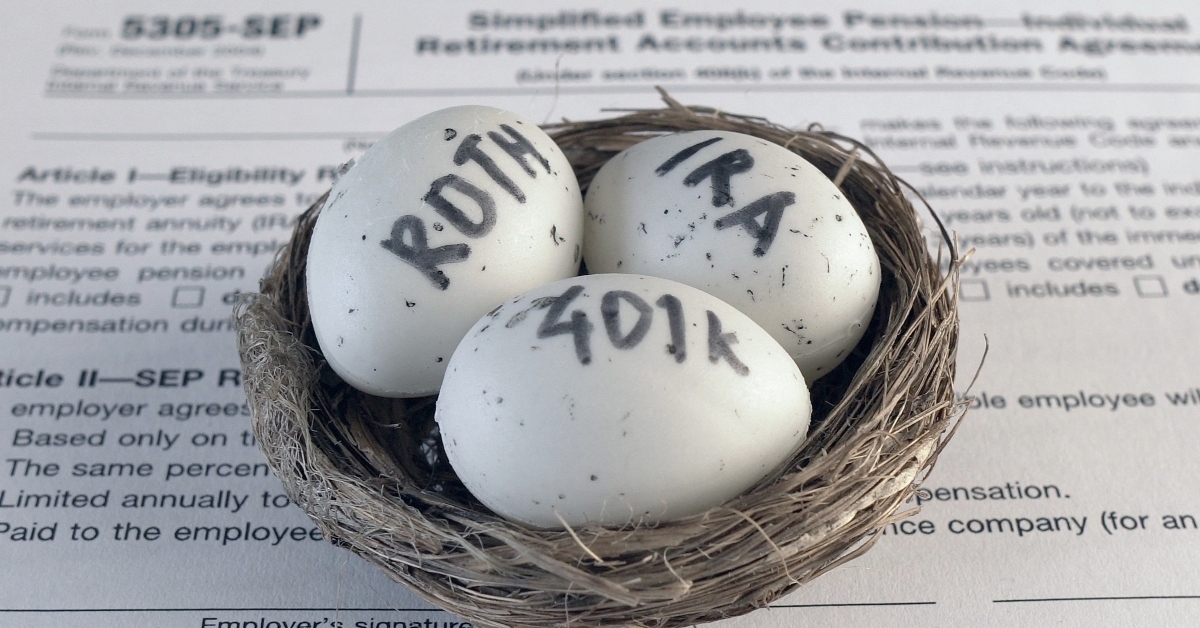
Maksim Shchur/Adobe three eggs with inscriptions

As you build your savins=gs, opting to invest in the right savings vehicles can make a big difference. Traditional IRAs, Roth IRAs, and 401(k)s each offer a tax-advantaged way to save for retirement. If possible, make it a priority to max out your retirement contributions to all of the accounts you have access to.

As of 2024, savers can contribute up to $23,000 to their 401(k). Savers age 50 and older can also contribute up to $7,000 to the IRA of their choice for the year.

Maxing out these retirement accounts can help you make significant headway in your savings journey.

Released: The Definitive Guide to Retirement Income

Most people spend their entire working lives focusing on one thing: growing a pile of money. Then they retire and discover the skill they actually need is close to the opposite. Turning that pile into steady income, year after year, through good markets and bad, without ever running out. It may be the least discussed and most consequential transition in personal finance, and plenty of otherwise careful investors walk into it with no real plan.

That is exactly what The Definitive Guide to Retirement Income helps answer.1 It is a free guide from Fisher Investments covering what your retirement will really cost, where the cash flow should come from, and how much you can safely withdraw each year. Learn More Here ›

Take advantage of catch-up contributions

Brian Jackson/Adobe piggy bank savings

For savers over 50, catch-up contributions are an option for tax-advantaged accounts.

If you are over 50, you can save an additional $1,000 in your IRA, which leads to a total contribution of $8,000 when you max out your account. You can also contribute an additional $7,500 to your 401(k), for a total of $30,500 in contributions for 2024.

Earn extra money

insta_photos/Adobe worried senior couple checking documents

Saving for your golden years can be difficult because you still have regular bills to pay for. One way to make room for retirement savings is to make extra money.

The good news is that building an extra stream of income is very possible. Some ways to grow your income include taking online surveys, becoming an online bookkeeper, and proofreading. As you make more income, you can funnel the money into your retirement savings.

Get a raise

Tamani Chithambo/peopleimages.com/Adobe couple computing mortgage payment

Depending on your job situation, you might be well overdue for a raise at work. Make a plan and ask for a bump to your salary.

If you can't get a raise, consider switching jobs to find an employer willing to pay you more for your experience.

Eliminate high-interest debt

david_franklin/Adobe retirement plan formula

Debt often acts like a drain on your financial resources, especially high-interest debt. If you are dealing with credit card debt, a growing balance can make it difficult to save for retirement.

Consider paying off this debt as soon as possible. When you eliminate the monthly payment, you can redirect the funds to your retirement savings.

Cut back on spending

cacaroot/Adobe graphs on table with plan

Although cutting back on your expenses isn't always fun, it does offer a way to save for retirement. If possible, look for ways to slash your biggest expenses. In general, Americans spend the most on their housing, cars, and food.

Some ways to save would include downsizing your living situation or trading in your car for an older vehicle. Additionally, skipping takeout meals and grocery shopping with coupons could make room in your budget for savings.

Bottom line

Andrey Popov/Adobe retirement plan on book

Although saving for retirement is a big goal, it's possible to boost your savings by earning more, spending less, and paying off high-interest debt.

If you are ready to build a brighter retirement, then try implementing the strategies above to make fast progress.

AARP Benefits
  • Huge discounts on travel, groceries, prescriptions and more
  • Access to financial planning resources and health tools
  • For a limited time, get 55% off 5-year plans


Financebuzz logo

Thanks for subscribing!

Please check your email to confirm your subscription.