 Add Us On Google

There are many retirees today who are living on just Social Security. And seniors who don't have income outside of those monthly checks tend to have a hard time making ends meet.
It's one thing to have to cover typical retirement expenses like housing, healthcare, transportation, utilities, and food on Social Security. The average benefit today is only about $2,089 per month, which amounts to just a little more than $25,000 per year. But when you introduce student loan payments, which some seniors have, stretching those Social Security checks can be even harder.
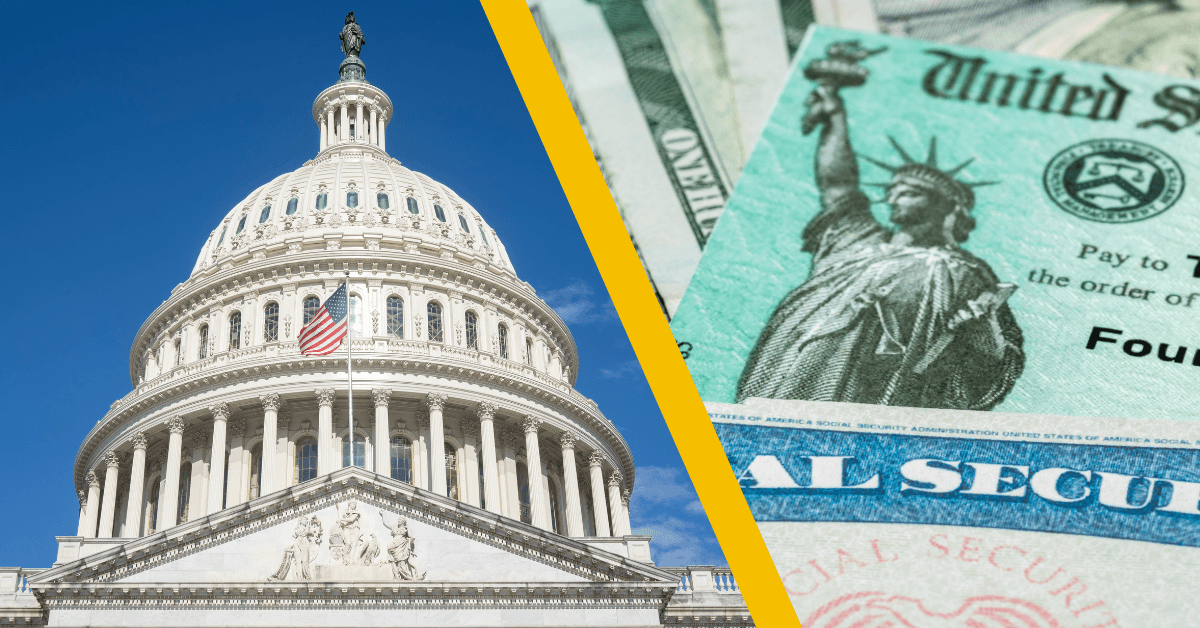
Making matters worse is that falling behind on federal student loans could result in Social Security garnishment if involuntary collections resume; those collections are currently paused, but some lawmakers are looking to change that rule.
Get a protection plan on all your appliances
Did you know if your air conditioner stops working, your homeowner’s insurance won’t cover it? Same with plumbing, electrical issues, appliances, and more.
A home warranty from Choice Home Warranty could pick up the slack where insurance falls short.
For a limited time, you can get your first month free with a Single Payment home warranty plan.
Student loan debt isn't just a young person's problem
It's easy to think of student loan debt as a young person's problem. But older Americans carry plenty of student debt, too.
The National Consumer Law Center reports that as of late 2024, an estimated 3.5 million Americans ages 60 and older owed money in student loans. And collectively, the total amount of student loan debt was more than $125 billion. The group further reports that 33% of seniors with federal student loans were in default on that debt prior to the COVID-19 pandemic.
Defaulting on federal student loan payments has consequences
The Social Security Administration is allowed to garnish benefits under certain circumstances. Seniors who owe money on taxes, for example, could see some of their Social Security checks withheld. Similarly, defaulting on federal student loans could result in Social Security garnishment.
The government isn't allowed to take seniors' Social Security checks in full. Garnishment is typically limited to 15% of seniors' benefits.
But still, a 15% garnishment could be terrible for older Americans who have only Social Security to live on. For the average check, a 15% garnishment would mean having to live on $1,776 per month instead of $2,089. Given that it's a struggle to live on the latter, losing 15% could plunge the typical senior on Social Security into poverty.
There's a push to end Social Security garnishment for missed student loan payments
Losing a portion of Social Security to garnishment for unpaid student debt burdens seniors tremendously. Some lawmakers are trying to put an end to that practice.
Senator Bernie Sanders recently introduced a proposal called the Stop Social Security Garnishment Act. The bill also has support from Elizabeth Warren and Ed Markey, both Massachusetts senators. The bill is pretty straightforward, stating that Social Security shouldn't be withheld due to unpaid student loan debt.
"In the richest country in the history of the world, no senior should have their Social Security payments taken away from them to pay back student debt," Sanders said, as reported by CNBC. "This is especially true when seniors throughout the country already cannot afford the skyrocketing price of healthcare, prescription drugs, groceries, and housing."
If you’re over 50, take advantage of massive discounts and financial resources
Over 50? Join AARP today— because if you’re not a member you could be missing out on huge perks. When you start your membership today, you can get discounts on things like travel, meal deliveries, eyeglasses, prescriptions that aren’t covered by insurance and more.
Start your membership by creating an account here and filling in all of the information (Do not skip this step!) Doing so will allow you to take up to 25% off your AARP membership, making it just $15 the first year with auto-renewal.
Be careful when taking out student loans later in life
Many people who owe money in student loans during their senior years aren't still carrying debt from when they were teenagers. Rather, some people may take out loans as parents or grandparents to help their children or grandchildren pay for college.
The problem with taking out student loans later in life is that there's a more limited window to repay that debt. And clearly, failing to keep up with payments can have serious consequences.
For parents, taking out student loans could mean having to skip out on making retirement plan contributions, which could lead to an income shortfall later in life. And even then, there's no guarantee that those payments will always be manageable.
Retirees should be especially cautious about taking on student debt for family members. Even those with ample savings need to be careful, because surprise expenses could erode an IRA or 401(k), making student loans harder to manage.
Bottom line
Your Social Security benefits may be a big part of your retirement plan. But if you don't pay your federal student loans when you're supposed to, you could end up losing a portion of your monthly benefits.
Even though there's a proposal to end that practice, garnishment is still a real threat. So it's best to not put yourself in a situation where you owe money in student loans later in life if it can be avoided. And that could mean talking to children or grandchildren and setting expectations.
It's not an easy thing to take on tens of thousands of dollars in student debt as a teenager or young adult. But people in that boat have their whole lives to repay their loans, whereas if you borrow when you're older, your options are more limited. So if you're looking at taking out loans at an older age, make sure you understand all of the things that could go wrong before you commit.
More from FinanceBuzz:
- Retire like the rich: 14 ways you could build wealth in your 50s.
- Find out if you could pay less for car insurance in just a few clicks.
- Make these 7 savvy moves when you have $1,000 in the bank.
- 14 moves seniors could benefit from but often forget about.








- Huge discounts on travel, groceries, prescriptions and more
- Access to financial planning resources and health tools
- Join AARP and get 25% off with automatic renewal