






 Add Us On Google

When used wisely, a credit card can help you make purchases more conveniently, gain perks, and build credit, which comes in handy for future goals like buying a house or car. But if you're new to credit cards, it can feel like a lot of jargon is thrown at you: APR, cash back, annual fees, and more. Fortunately, you can find good, low-cost, and beginner-friendly credit cards with many issuers.
Chase, the largest credit card issuer in the country, is a good place to start since it offers several options. We like that it has cards for just about anybody, including college students, young adults, and people who've never carried a credit card before. It also offers excellent cards for reward seekers and travelers.
While the best Chase credit card for beginners will depend on your credit history, spending habits, and lifestyle, we've identified five top options based on fees, rewards, and additional benefits. Find out if one is right for you.
Compare the best Chase cards for beginners
| Chase card | Great for... | Recommended credit | Annual fee |
 Chase Freedom Unlimited® (Rates and fees) |
Cashback rewards | Excellent, Good | $0 |
 Chase Freedom Rise® (Rates and fees) |
Credit newbies | Fair, Poor | $0 |
 Chase Freedom Flex® (Rates and fees) |
Added perks | Excellent, Good | $0 |
 Chase Sapphire Preferred® Card (Rates and fees) |
Travelers | Excellent, Good | $95 |
 Ink Business Unlimited® Credit Card (Rates and fees) |
Solopreneurs and small business owners | Excellent, Good | $0 |
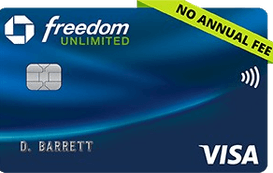
Chase Freedom Unlimited®
If you already have a strong credit score, the Chase Freedom Unlimited® card is basically a step up from the Chase Freedom Rise®. Like that card, it doesn't have an annual fee, and it offers 1.5% cash back on all purchases (offered as Chase Ultimate Rewards points, which are more flexible than true cash back when you redeem them.)
But the Freedom Unlimited card takes rewards up a notch: You can also earn 3% on drugstore purchases and dining at restaurants, including takeout and eligible delivery service, plus 5% on travel purchased through Chase Travel℠. If you travel or dine out often, you could get a lot of value from these spending categories, though others might prefer a card with bonus categories for groceries and gas.
This Chase card also offers you a bonus of $200 when you spend $500 within your first 3 months of account opening. Since it's not a huge spending minimum, you may be able to reach it simply by charging your everyday bills. And if you want to avoid interest on purchases or a balance transfer, you'll like this card's 0% intro APR for 15 months on purchases and balance transfers (then 18.49% - 27.99% Variable APR).
What we don't like is that this card charges foreign transaction fees, which can be annoying when you're traveling outside the U.S. However, you can access some travel benefits, such as trip cancellation and interruption insurance.
Note that the Chase Freedom Unlimited is what you'll be upgraded to from the Chase Freedom Rise if you make on-time payments and use your card. So even if the Freedom Unlimited isn't your first Chase card, it could be your second.
Who this card is right for: If you have good credit, this Chase card is a great starting point for earning standard and elevated rewards on common purchases.
- No annual fee
- Intro APR offers
- High reward rate
- Accessible welcome bonus
- Foreign transaction fee: 3% of each transaction in U.S. dollars
- At least good credit is recommended
- Limited travel benefits and purchase protections
Apply now | Learn more in our Chase Freedom Unlimited review
Use the calculator below to customize your spending categories and expenses to see how much you could earn with the Chase Freedom Unlimited.
| Monthly Category Spending |
|
Travel purchased through Chase Travel℠
$
Earn 5% Cash Back
Value
|
|
Drugstore purchases and dining at restaurants, including takeout and eligible delivery service
$
Earn 3% Cash Back
Value
|
|
All other purchases
$
Earn 1.5% Cash Back
Value
|
These estimates are based on FinanceBuzz's own assessment of the terms of the financial product and your inputs. Actual rewards may vary depending on your usage of the product.
Chase Freedom Rise®
If you've never had a credit card before (or made mistakes with one in the past), we recommend the Chase Freedom Rise® as a good starting point. Designed for those with poor-to-fair credit (or no credit at all), it's a simple, low-cost credit card that's ideal for the less experienced.
While it doesn't have many bells and whistles, it features an easy-to-use rewards structure and program. You can earn up to 1.5% cash back on every purchase and redeem your rewards for statement credits, gift cards, travel, and more. This might not be the best news if you prefer earning more with bonus categories, but it also keeps things simple when you're first starting out, which is why we like it.
Plus, this card offers the chance to earn a $25 statement credit after signing up for automatic payments within the first three months of opening your account. We think this is a great incentive for simply making sure you pay your bill on time.
However, while some cards offer introductory annual percentage rates (APRs) and welcome bonuses, the Freedom Rise card has neither. Additionally, foreign transaction fees apply, so this card isn't great for overseas travelers.
You can increase your approval odds by having $250 or more in a Chase savings or checking account, so it could make sense to open one before applying. If you're approved, Chase will consider upgrading you to the Chase Freedom Unlimited annually, provided you've used the card within the past year and made all on-time payments.
Who this card is right for: We recommend this card if you'd like a card to build or rebuild your credit and don't mind the lack of bonus rewards categories.
- Might qualify with poor credit or no history
- No annual fee
- Earn a $25 statement credit after signing up for automatic payments within the first three months of opening your account
- Simple rewards structure
- No guarantee of approval
- No intro APR offer
- Foreign transaction fee: 3%
Apply now | Learn more in our Chase Freedom Rise review
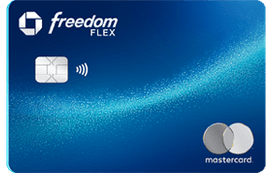
Chase Freedom Flex®
As you gain experience with rewards credit cards, you may want to consider boosting your earnings with a card that offers a higher rewards rate on changing categories. With the Chase Freedom Flex®, you can earn 5% cash back on rotating quarterly categories you activate (on up to $1,500 total spent) and travel purchased through Chase Travel℠.
For example, from January through March 2025, you could have earned 5% cash back on groceries or gym memberships. In April through June 2025, you could have earned 5% cash back on Amazon purchases. While there's no guarantee that every quarter's categories will appeal to you, we've found that there's often something for everybody.
Like the Freedom Unlimited, this card offers extra travel and purchase protections that aren't always found on cash back cards. But it particularly stands out for offering cell phone insurance of up to $800 per claim (max benefit of $1,000 per year for up to two claims). Since you might already be paying $10 to $15 per month for separate coverage, the savings could add up.
Unlike the Chase Freedom Rise, this card offers a 0% intro APR for 15 months on balance transfers and purchases (then 18.49% - 27.99% Variable APR) and a $200 welcome bonus after spending $500 in the first 3 months of account opening.
A word of caution: you need to remember to activate the spending categories to earn the higher rewards rate with this card. Otherwise, you'll earn just 1% on your purchases. Also, know that the quarterly category limits can be a drawback if you're a big spender, and foreign transaction fees apply to overseas purchases.
Who this card is right for: This Chase card is worth a look if you prioritize perks like rotating bonus categories, cell phone insurance, and new cardmember promotions.
- Intro APR offer and welcome bonus
- Cell phone insurance
- Potential for higher rewards
- No annual fee
- More complex reward structure than a flat-rate card
- Must activate quarterly categories
- A good or better credit score is recommended
- Foreign transaction fee: None
Apply now | Learn more in our Chase Freedom Flex review
Chase Sapphire Preferred® Card
The Chase Sapphire Preferred® Card is one of the best credit cards for travel, and its popularity is well deserved in our book. Not only does it have a relatively low annual fee, but it also offers valuable rewards and extra travel perks, including trip cancellation and interruption insurance, baggage delay coverage, and auto rental coverage. Plus, it doesn't charge foreign transaction fees, so it could help you save when traveling outside of the U.S.
You should consider the Chase Sapphire Preferred if you want to add a travel card to your wallet. We think it makes an excellent first travel credit card because its annual fee is easier to offset than a fee with three digits, and Chase points are known to provide more value than other credit card points. It lets you earn 5X points on travel purchased through Chase Travel℠, 3X points on dining, vacation homes at top brands, gas & EV charging, top streaming services, and online groceries (excluding Walmart, Target, and wholesale clubs), 2X points on other travel purchases, and 1X on all other purchases. Plus, there's an up to $100 Chase Travel Hotel Credit each year, which already offsets the annual fee.
However, unlike many of Chase's other beginner-friendly cards, the Chase Sapphire Preferred doesn't offer introductory APRs, and its welcome bonus can be harder to earn because it requires $5,000 in spending within first 3 months after account opening. If you don't travel often, you could also find the card's rewards less useful, as they offer the best value when redeemed for travel.
Who this card is right for: You should consider the Chase Sapphire Preferred if you want to add a travel card to your wallet and don't mind the annual fee and lack of intro APR offers.
- Extensive complimentary travel coverage
- Foreign transaction fee: None
- Competitive travel rewards
- Annual $100 Chase Travel Hotel Credit
- $95 annual fee
- No intro APR offers
- Potentially less useful rewards for non-travelers
- High minimum spending requirement for the welcome offer
Apply now | Learn more in our Chase Sapphire Preferred review
Use the calculator below to customize your spending categories and expenses to see how much you could earn with the Chase Sapphire Preferred.

| Monthly Category Spending |
|
Travel purchased through Chase Travel℠
$
Earn 5x Points
Value
|
|
Dining, vacation homes at top brands, gas & EV charging, top streaming services, and online groceries (excluding Walmart, Target, and wholesale clubs)
$
Earn 3x Points
Value
|
|
Other travel purchases
$
Earn 2x Points
Value
|
|
All other purchases
$
Earn 1x Points
Value
|
These estimates are based on FinanceBuzz's own assessment of the terms of the financial product and your inputs. Actual rewards may vary depending on your usage of the product.
Ink Business Unlimited® Credit Card
The Ink Business Unlimited® Credit Card was my first business credit card, and it could be the perfect first Chase card for you. For freelancers, independent contractors, solopreneurs, and small business owners, it offers useful rewards and perks without an annual fee.
You can earn 1.5% on every purchase and redeem your rewards for statement credits, gift cards, and more.
Plus, if you're after new cardmember offers, you might appreciate the 0% introductory APR on purchases for 12 months (then 16.99% - 24.99% Variable APR) and the $750 welcome bonus, though the latter has a high $6,000 minimum spending threshold within first 3 months of account opening.
Note that this card doesn't have bonus categories. While this makes the card simpler for beginners, you may be able to earn a higher rewards rate with another card if you have a bit of experience. And if you travel for work, keep in mind this card has limited travel protections and benefits and charges foreign transaction fees.
Who this card is right for: Consider this option if you're a beginner looking for a no-annual-fee business credit card with solid promotions for new cardmembers.
- Intro APR offer on new purchases
- Competitive welcome offer
- Simple rewards structure
- No annual fee
- No intro APR offer on balance transfers
- Limited travel perks
- Foreign transaction fee: 3% of each transaction in U.S. dollars
- High minimum spending requirement for the welcome offer
Apply now | Learn more in our Chase Ink Business Unlimited review
Is Chase a good option for a first credit card?
Yes, Chase is a good option for a first credit card, but the right Chase card for you to start with depends on your needs and experience. Chase offers many credit cards that could be good choices for first-time credit card users, with the Freedom Rise card likely being the best for most beginners. This card stands out for having easier qualification requirements and automatic benefits to help you build credit. The issuer also provides great credit card options for people with more credit experience, including those looking for more advanced rewards structures.
Types of Chase credit cards that are best for beginners
Chase offers a few types of credit cards that are suitable for beginners.
- No-annual-fee cards: Without an annual fee, these credit cards allow you to earn rewards and use credit without budgeting for an added cost every year. No-annual-fee Chase cards include the Freedom lineup. As a beginner, you likely don't need the premium benefits that come with more expensive cards with high annual fees.
- Cash back cards: Some rewards credit cards offer points or airline miles, and maximizing their value requires extra tracking and work. For first-time credit card users, those cards can be confusing. A simple cash back card with flexible redemptions is your best bet if you're getting started. It may also be less stressful to get a card with a flat reward rate, since tracking categories (which may rotate) can be a hassle when starting out.
How Chase Ultimate Rewards works
Chase Ultimate Rewards is a rewards program that allows you to use your credit card rewards for cash back, gift cards, travel, and more. Instead of earning true cash back, which is generally only redeemable for cash-equivalent redemptions like statement credits or gift cards, Chase cash back cards (including the Freedom Unlimited and Freedom Flex) earn rewards in the form of Ultimate Rewards points.
Chase Ultimate Rewards provides more flexibility and control over your rewards than a typical cashback program, so you can redeem your rewards in a way that makes sense for you.
You can earn rewards on your purchases and redeem them through the Chase Ultimate Rewards portal. With some cards, you can get more value from your points when you redeem them for travel through Chase Travel℠.
Tips to choose the best beginner Chase card
To pick the right Chase credit card for you, ask yourself the following questions.
What's my credit score?
Your credit affects what credit card options you have. If you know you have good to excellent credit, you'll have more options. If you have poor credit (or no credit at all), you may want to try starting with the Chase Freedom Rise card. Once you've improved your credit, you could then ask Chase about upgrade options.
What do I tend to spend money on?
If you tend to spend money on everyday essentials like groceries or gas, a card with fewer bonus categories could make sense. If you tend to spend more in certain areas, such as travel or dining at restaurants, consider a card that offers higher rewards in select categories, like the Chase Sapphire Preferred card, which may be a better match. Just watch out for any cards that have quarterly spending limits for these higher rewards.
How important is travel to me?
With cards like the Chase Sapphire Preferred card, you get the most value for your rewards when you redeem them for travel arrangements through Chase Travel. But if you don't travel very often, that feature may not be useful to you, and a card that offers a simpler cashback structure may be more suitable.
Other beginner credit card options
If you're just starting out and working on your credit, a traditional credit card from Chase or other issuers isn't your only option. One of the following options may help you build your credit.
- Student credit cards: If you're in college, a student credit card is a great beginner-friendly option. These cards are easier to qualify for than other credit cards and have relatively low credit limits. If you have no credit history, they can help you start building credit. However, they may offer lower credit limits and fewer benefits than non-student cards.
- Secured credit cards: Secured credit cards are best for people with poor credit or no credit. They require a security deposit, such as $250, which often acts as your card's spending limit. As you use the card and make payments, you can start building good credit (and eventually transition to an unsecured credit card).
FAQs
What Chase credit card is best for building credit?
If you're building credit from scratch, the Chase Freedom Rise card is specifically designed for people without established credit histories. It's one of the easiest cards to qualify for on our list.
Does Chase have any starter credit cards?
If you're looking for a starter card, the Chase Freedom Rise is a good option. It's easier to qualify for than other Chase cards, so you can qualify even if you have a limited credit history.
What credit score do you need to qualify for a Chase credit card?
Credit score requirements vary for Chase credit cards. Most are recommended for those with FICO credit scores that are at least "good" (670 or higher). But the Freedom Rise card could be available for those with credit scores in the poor-to-fair range.
What is the easiest Chase credit card to qualify for?
The easiest Chase credit card to qualify for is the Chase Freedom Rise card. If you have an existing Chase savings or checking account with a balance of at least $250, it can be easier to qualify.
What Chase card should you get first?
Which Chase card you should get first depends on your credit history and goals. Luckily, Chase has a pre-approval tool you can use to check your eligibility for different Chase cards without affecting your credit score.
Bottom line
The best Chase credit cards for beginners combine no or low annual fees with simple and easy-to-use rewards. If you're brand-new to credit cards, the Chase Freedom Rise® is a great starter credit card that Chase might automatically upgrade after you've demonstrated responsible use, while frequent travelers may prefer a card with more perks, like the Chase Sapphire Preferred® Card.
If you're approved for a credit card with Chase or any other issuer, here are our tips for using your first credit card responsibly. And if you're interested in applying for a Chase credit card but you don't have steady earnings of your own, learn ways to get a credit card without a job.
Current Offer
Earn a $200 Bonus after you spend $500 on purchases in your first 3 months from account opening
Annual Fee
$0
Rewards Rate
5% cash back on travel purchased through Chase Travel℠, 3% cash back on drugstore purchases and dining at restaurants, including takeout and eligible delivery service and unlimited 1.5% cash back on all other purchases